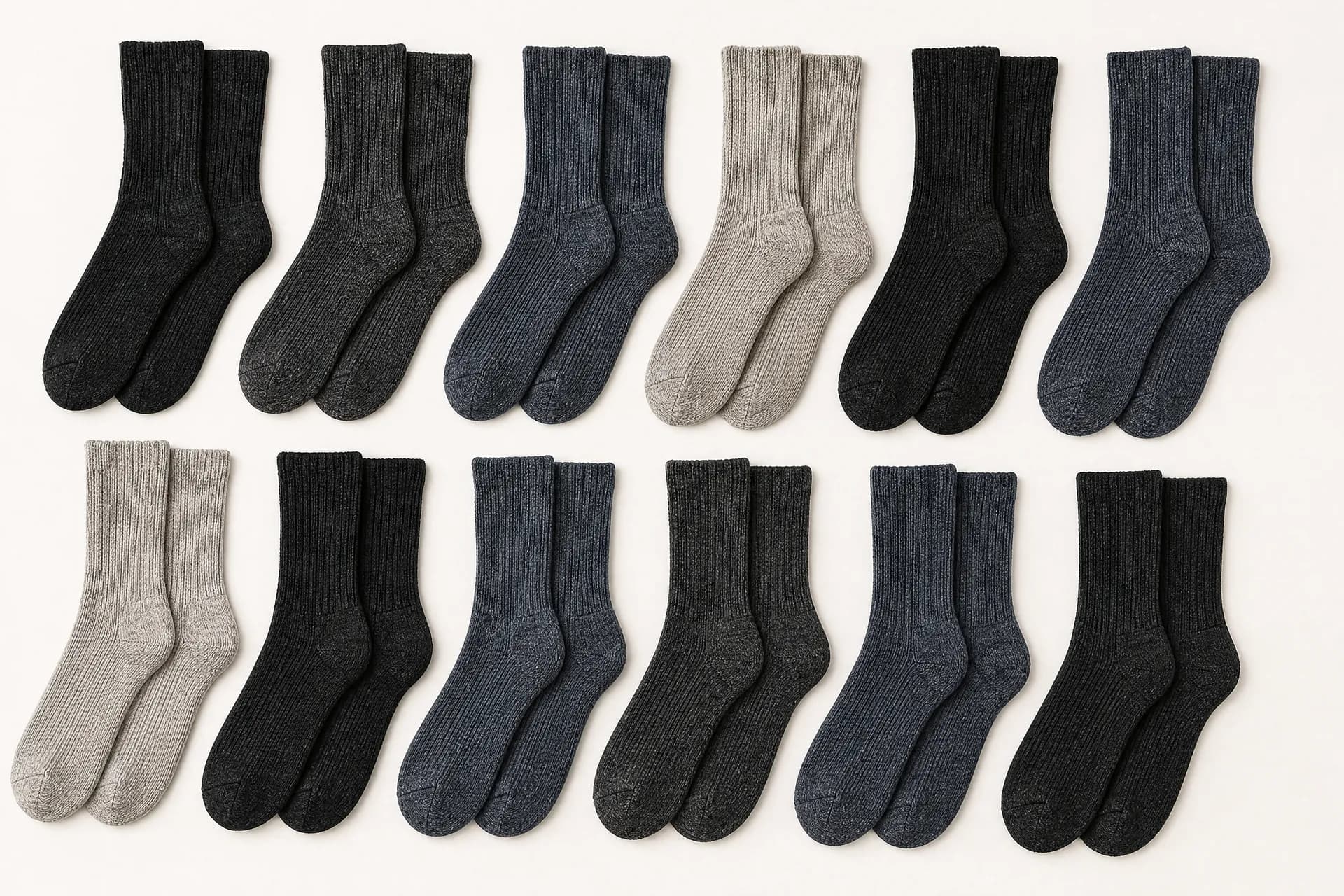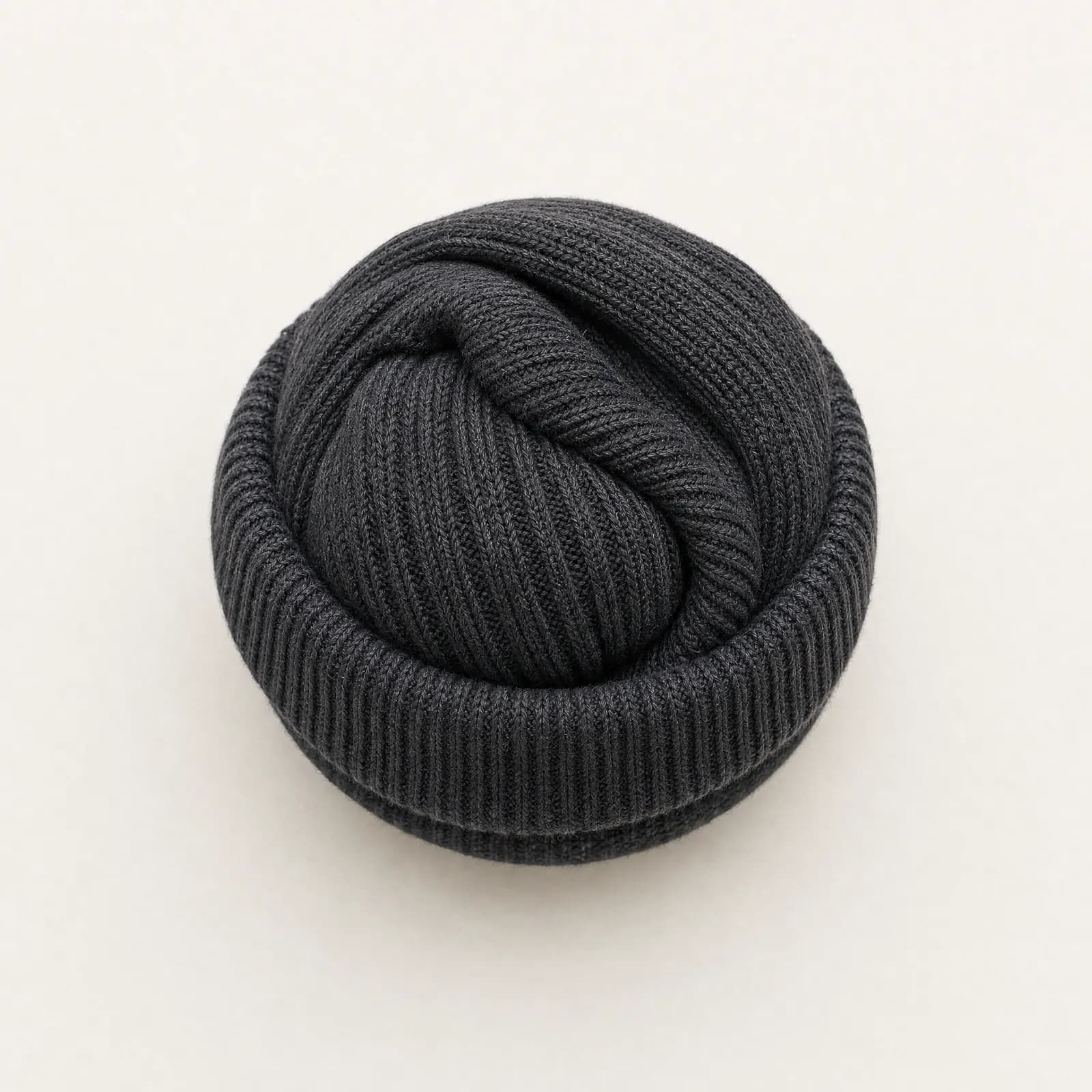
Classic roll
- Impact
- Moderate
- Effort
- Some doing
- Cuff wider by
- 1.7–4.5pp
You wear a pair for one day. The other six it lies in a drawer with its own cuff turned over it, held open the whole time. Elastic that is held open does not entirely come back.
This works out what that actually costs your cuffs — and for a great many pairs the honest answer is almost nothing.
The slider works without an account. Nothing on this screen leaves your browser.
Always a range, never a figure. A label gives the percentage of elastic fibre and never its type, and the two are not the same thing.
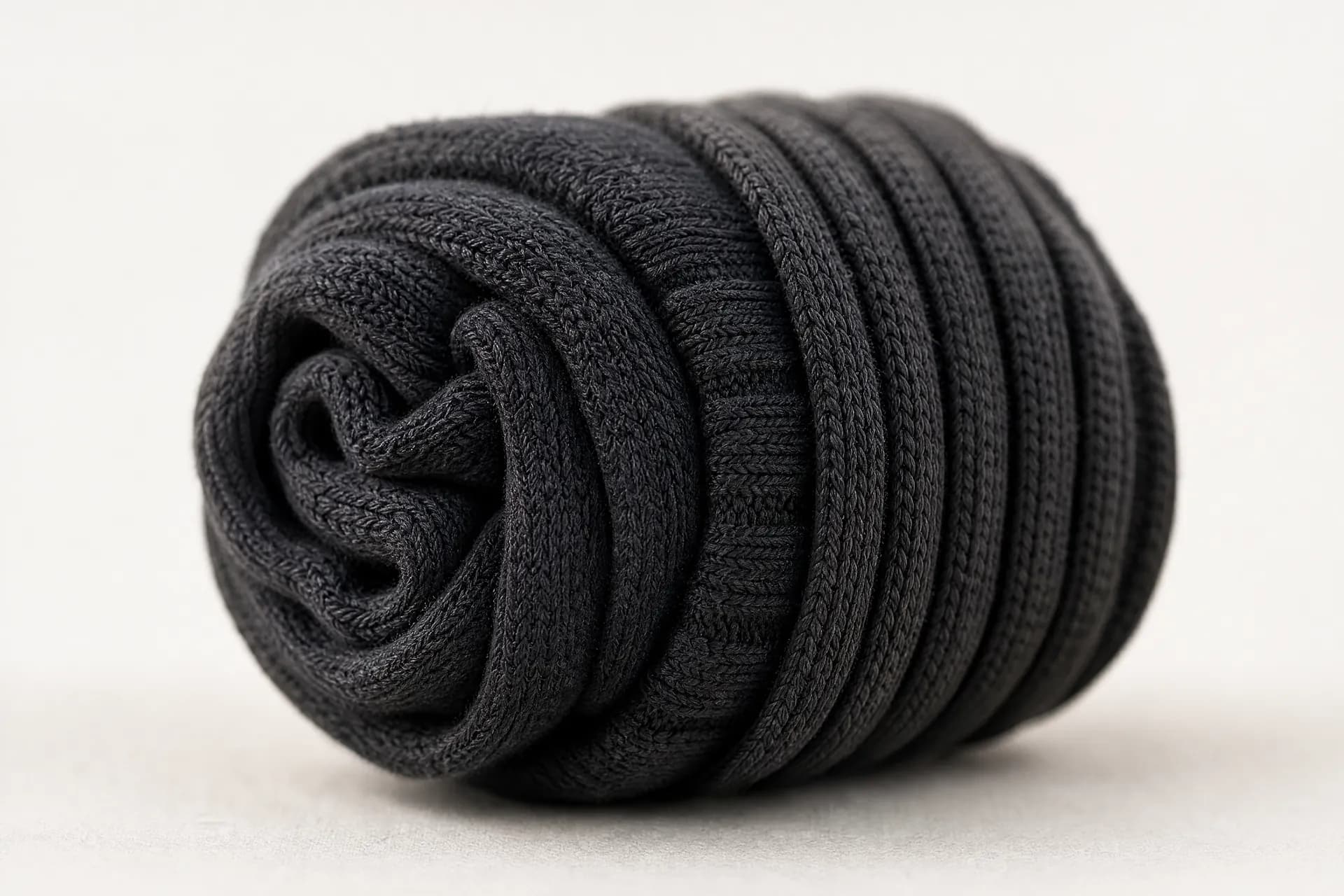
The bundle everyone makes. The band around the outside is the part doing the work.
Nothing worth acting on yet.
Everyday rotation sits in this stretch of the scale. Keep dragging to the pairs you put away for a season.
Keyboard: focus the scale and use the arrow keys to move a week at a time, Page Up and Page Down for larger jumps, Home and End for the ends of the range. Current value: 4 weeks.
Elastomeric yarn held at a fixed extension does not simply wait there. The stress in it decays while it is held, and when the load comes off, part of the extension does not come back. That unrecovered part is what a slack cuff is.
It accumulates with the logarithm of time rather than in proportion to it — which is exactly why a week and a month give nearly the same answer, and a week and a season do not.
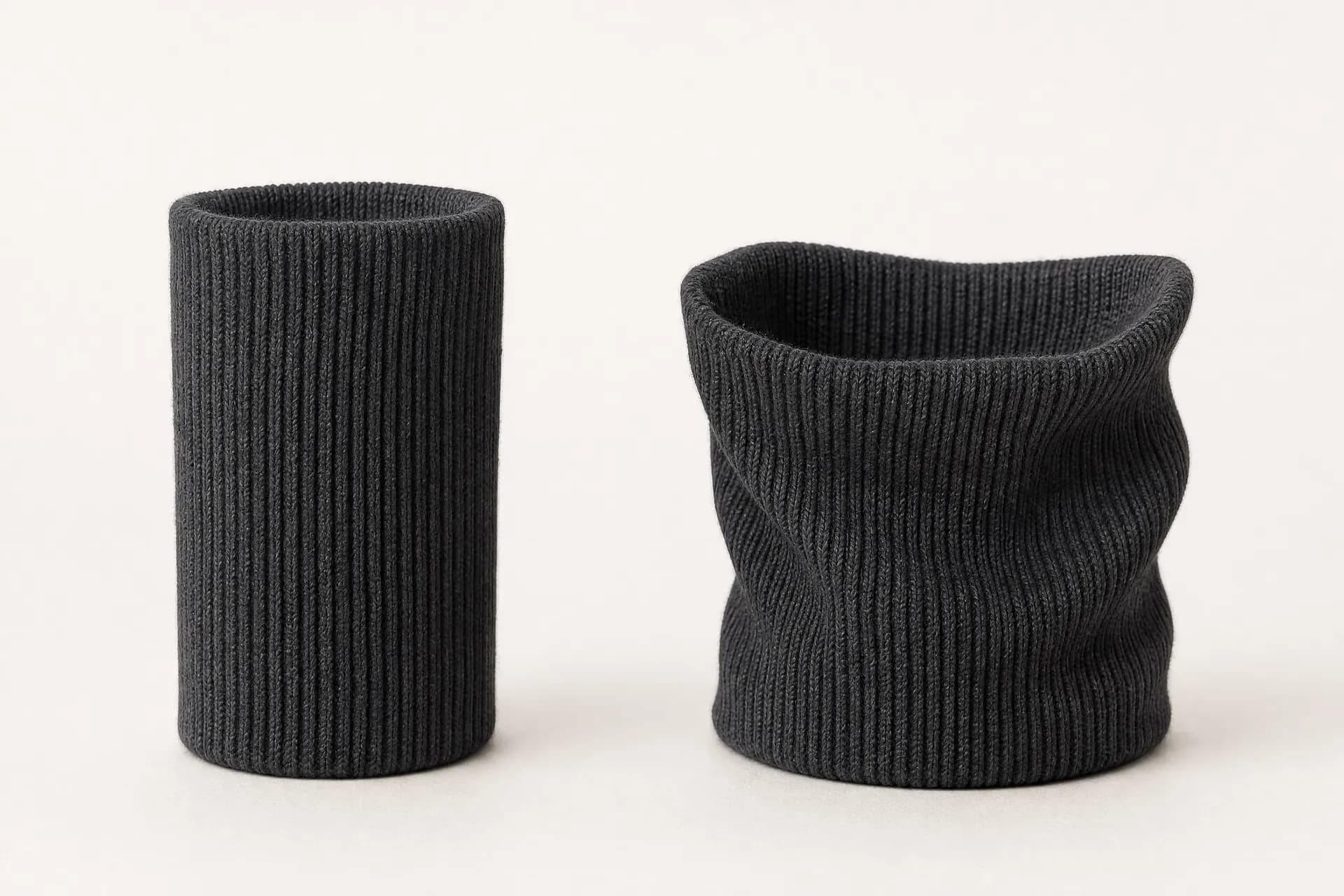
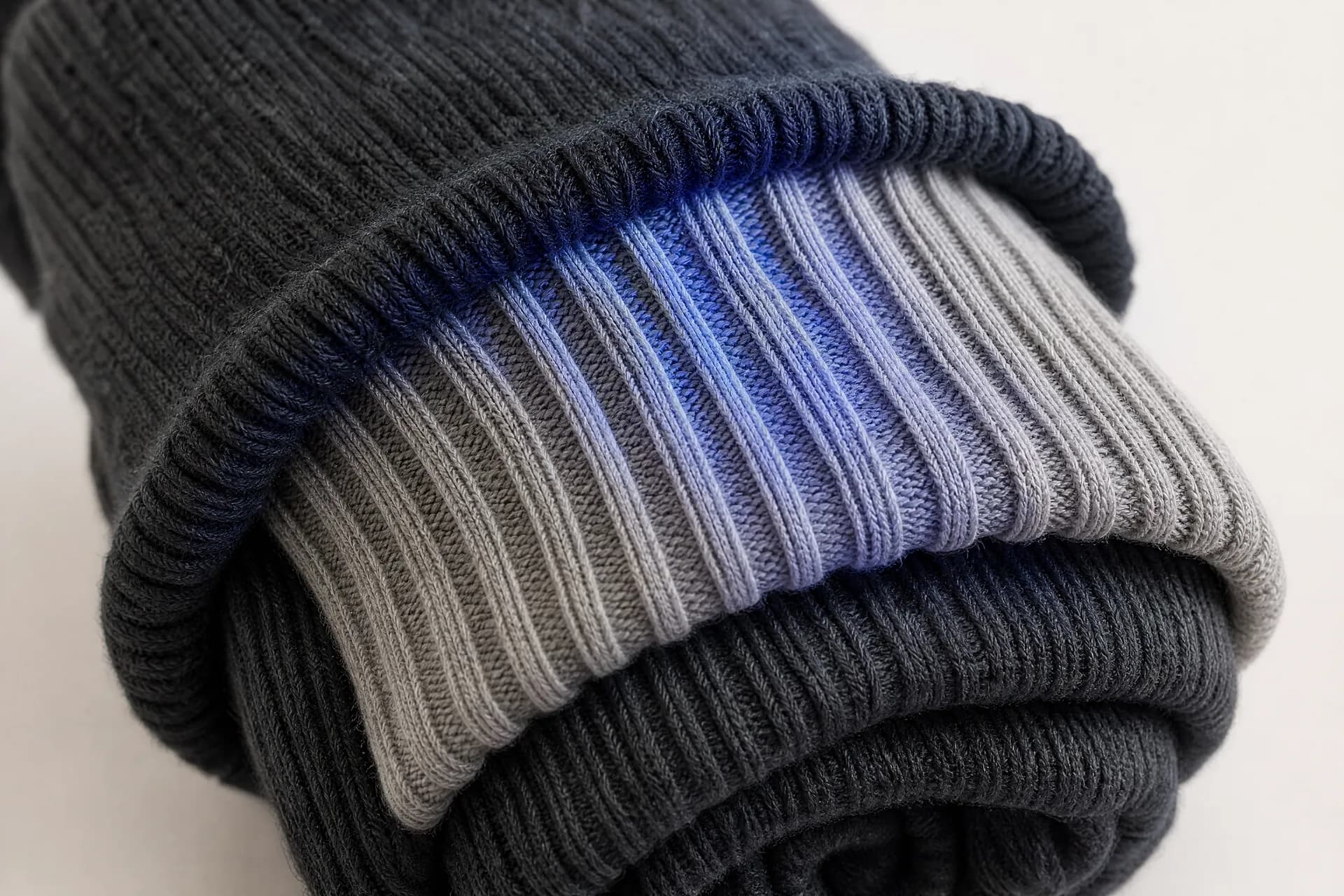
Same pair, same age, same washes. The one on the right spent two seasons with its own cuff pulled over it.
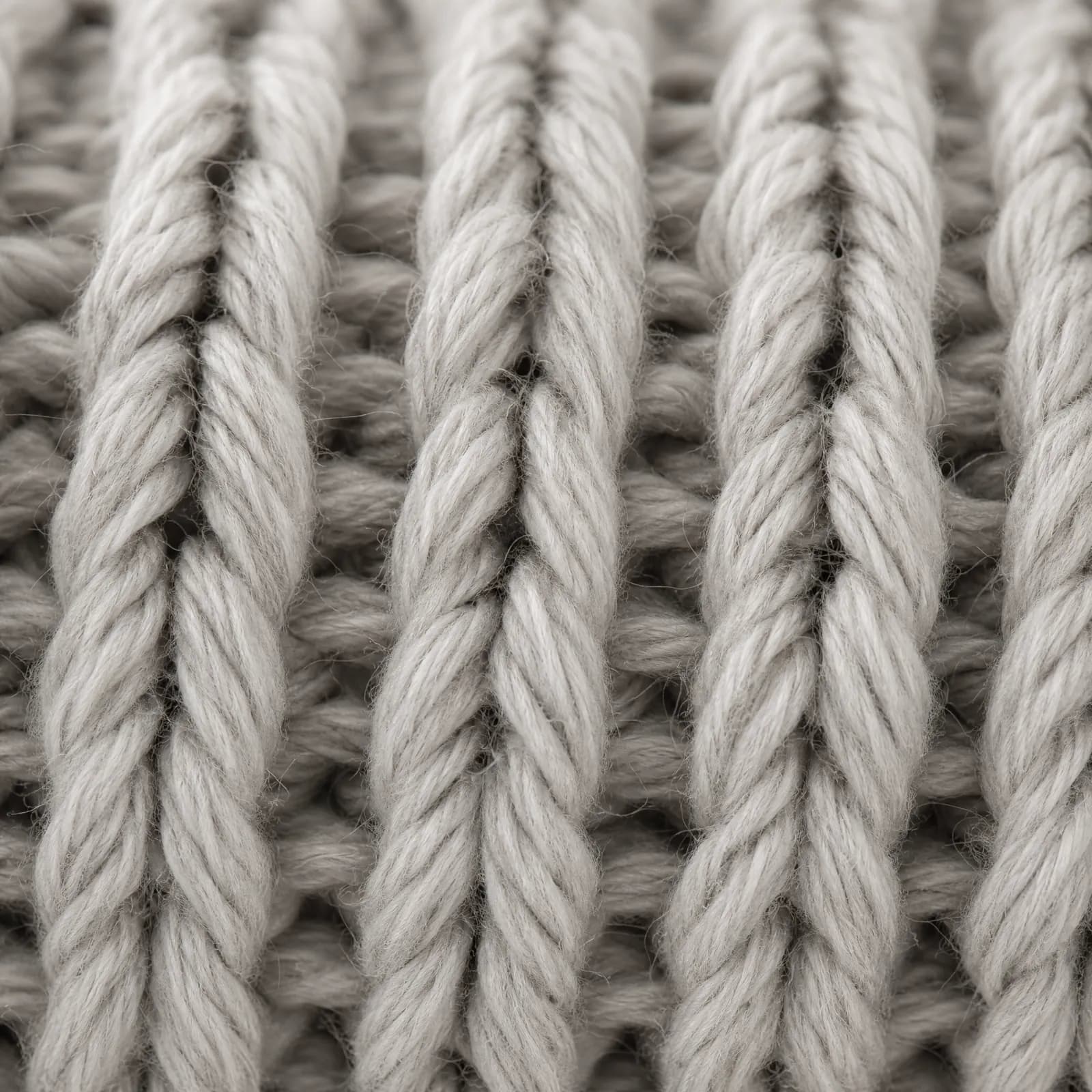
Photographs of a label and a cuff. Nothing worn, nothing on a person — the tool declines anything with a body in it, and what comes back never contains one either.
 01
The percentage of elastic fibre is the single largest input. If the label does not carry one, the estimate widens rather than guesses.
 02
The rib structure and the width of the band come from the photograph. How long the pair sits is the one thing only you know, and it is the variable that decides the answer.
 03
A comparison card and a step diagram come back: what each way of storing them costs, where the line is for this pair, and which of them you can ignore entirely.
One ordinary pair — 2% elastic fibre, a 2×2 rib, a 68 mm band — put away for 13 weeks. Effort is shown next to impact, at the same size, because a method that costs the elastic nothing and costs you an extra minute every week is not the method you will actually keep to.
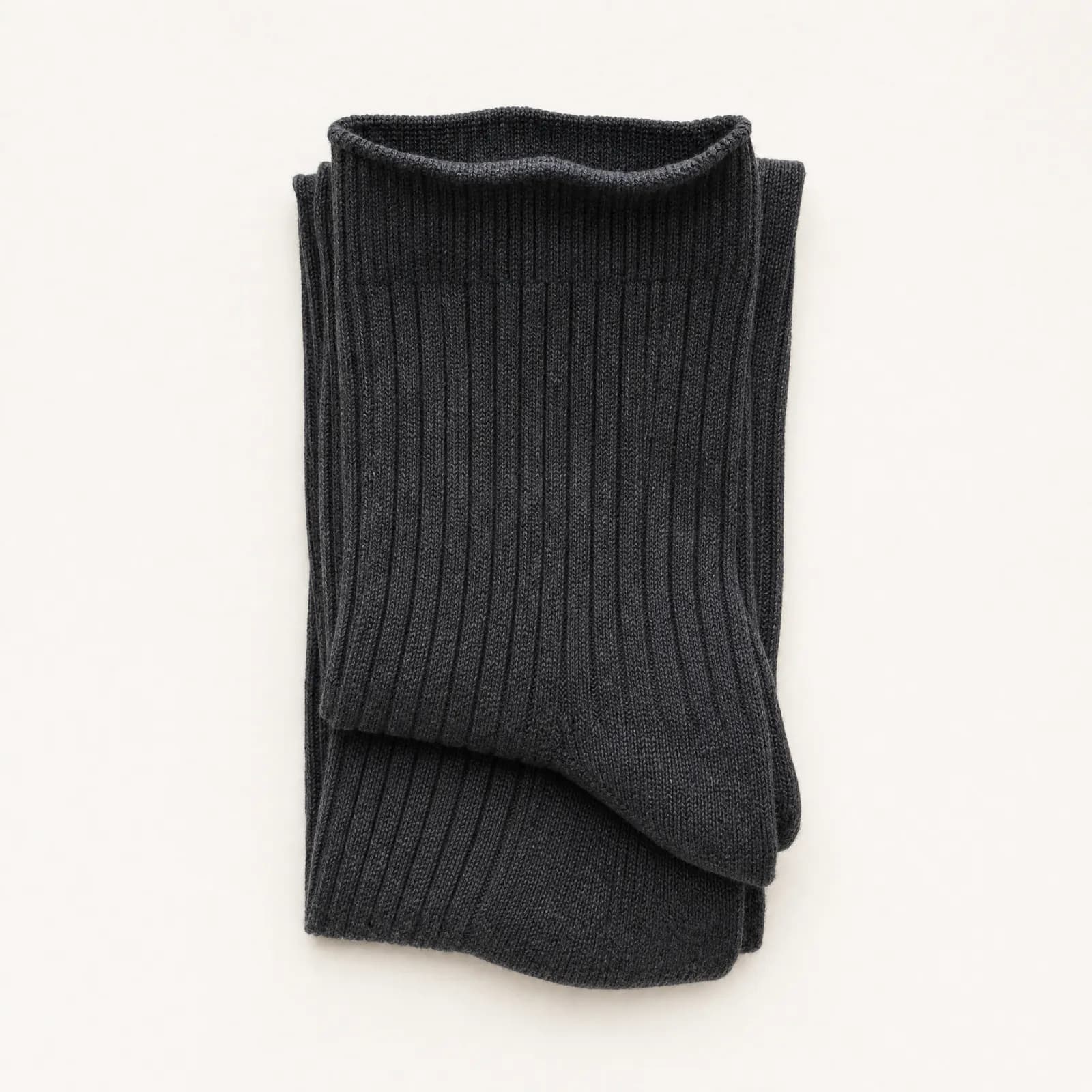
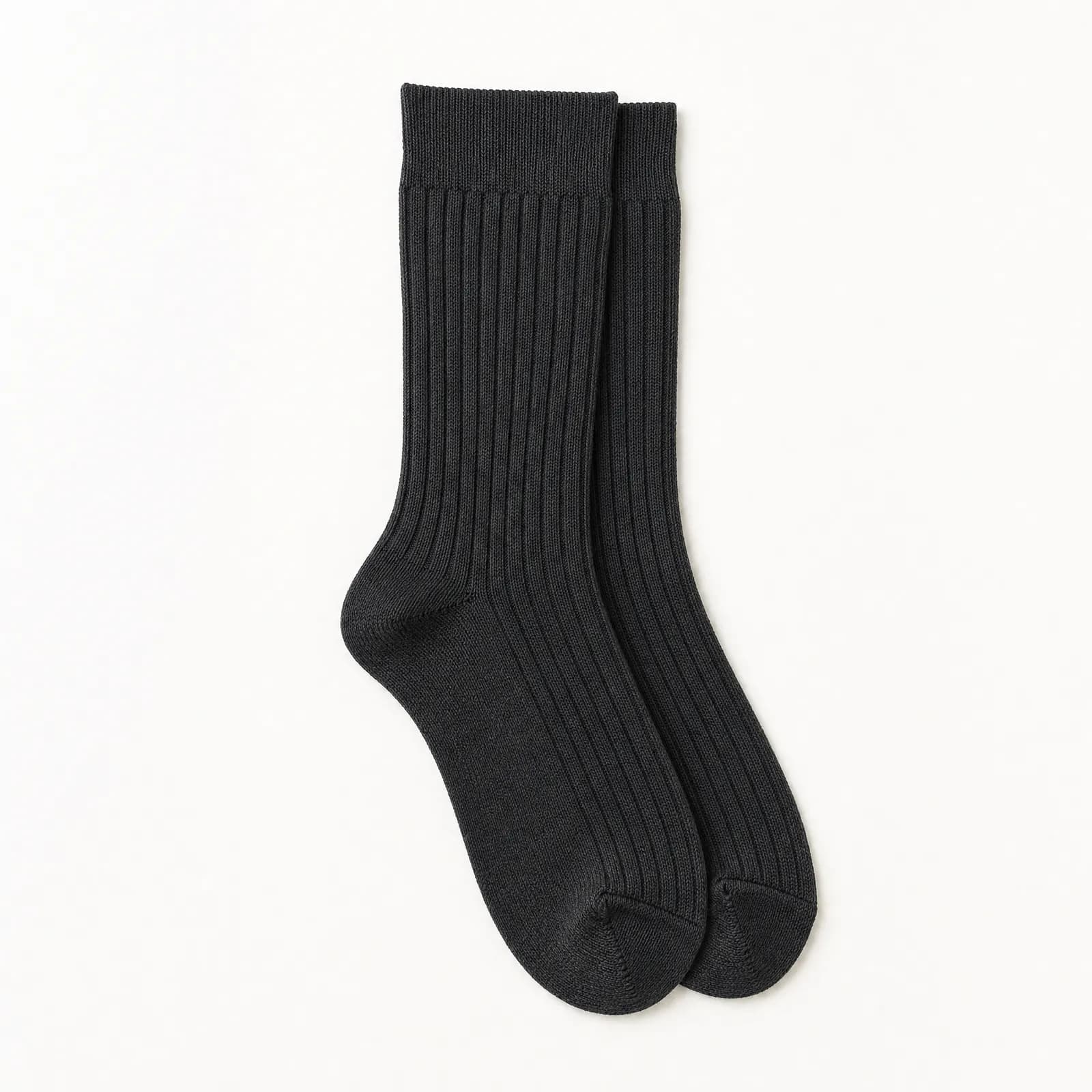
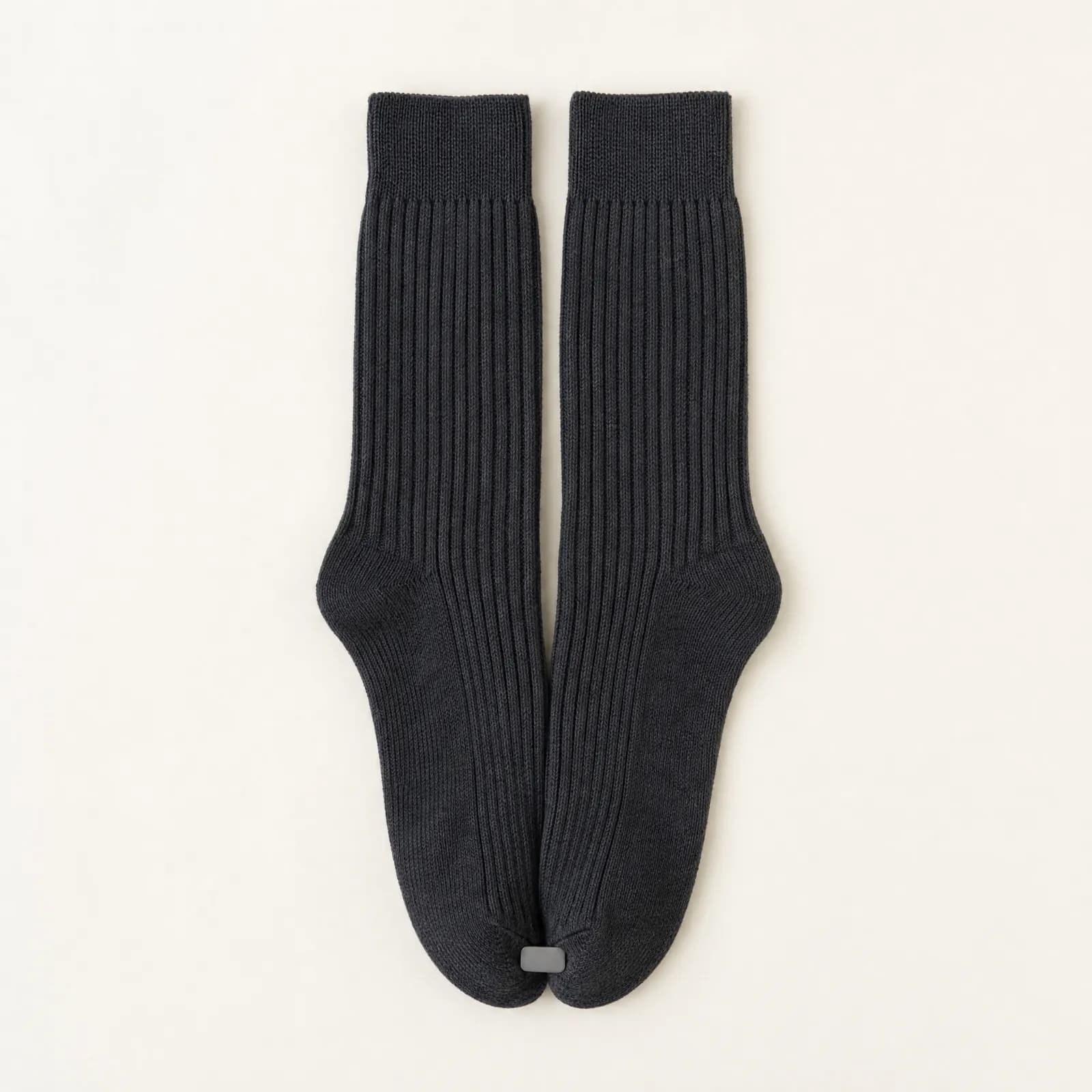
Both socks stacked, rolled into a ball, then one cuff turned inside out and pulled over the whole bundle.
The band is held open for long enough that some of the opening stops coming back.
Three separate movements, and the last one needs both hands. It only feels quick because it is a habit.
Both socks stacked and folded once, with the cuff turned down over the fold to hold it shut.
The band is held open, but this pair has enough left in it that the drawer is not what will finish it.
Two movements. The cuff is turned over one thickness of fabric instead of a whole ball.
Both socks laid flat, one on the other, and put down as they are.
Nothing holds the band open, so the elastic is not being asked for anything while it waits.
One movement. Nothing holds the band open, so nothing is being asked of the elastic at all.
Both socks laid flat and held together near the toe end so the pair stays together, leaving the cuff free.
Nothing holds the band open, so the elastic is not being asked for anything while it waits.
Two movements, plus something has to be to hand every time. That is the part people stop keeping up.
A week or two changes nothing. Stored the classic roll way, this pair turns the corner at roughly 7 weeks — so everyday drawer rotation is fine and anything left over a season is not.
Held extension accumulates. Two weeks is not a fifth of ten weeks — the first weeks do most of what they are going to do, and then the curve flattens. That is why the question is how long, and not how tightly.
Stored the classic way, this pair leaves the negligible band at around 7 weeks and stays out of it from then on. Every other method on this row stays inside it for the whole six months, and two of them take less doing than the one you are already using.
One movement. Nothing holds the band open, so nothing is being asked of the elastic at all.
A method that spares the elastic but takes longer every single week is not an answer, because nobody keeps it up. The cell worth having is the one where the impact is low and the doing is least.
Two of the four land there. Neither of them is the one most people use, and neither of them asks anything of you that the classic roll does not already.
| No. | Method | How much doing | Impact | Cuff wider by (pp) |
|---|---|---|---|---|
| 1 | Classic roll | Some doing | Moderate | 1.7–4.5 |
| 2 | Fold over | Least doing | Negligible | 0.4–1.0 |
| 3 | Flat stack | Least doing | Negligible | 0.0–0.4 |
| 4 | Clipped pair | Most doing | Negligible | 0.0–0.4 |
No storage products, no styled drawers, no hands, no people. What this tool looks at is a band of knitted fabric and what has been done to it, and that is all it shows you back.
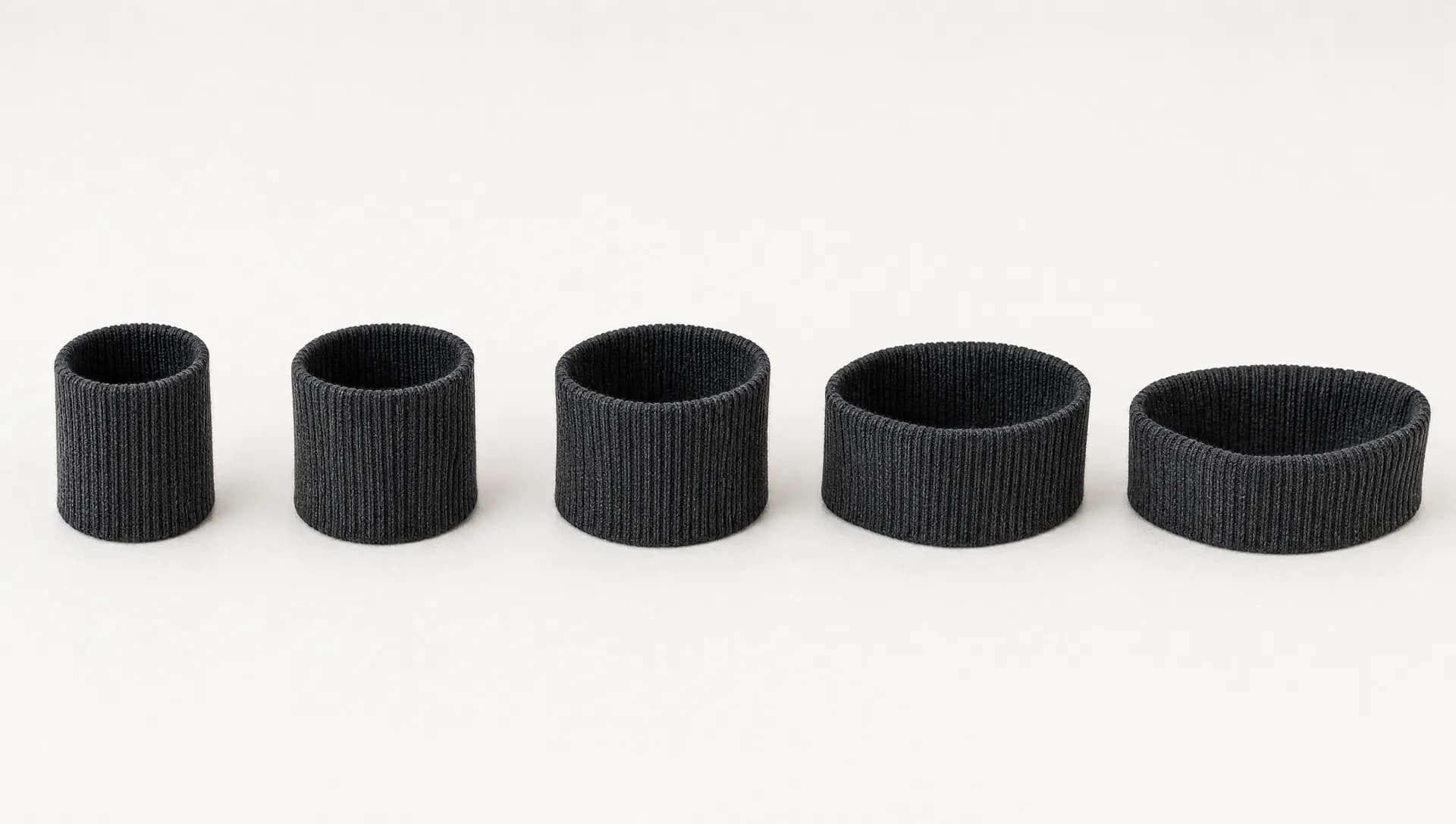
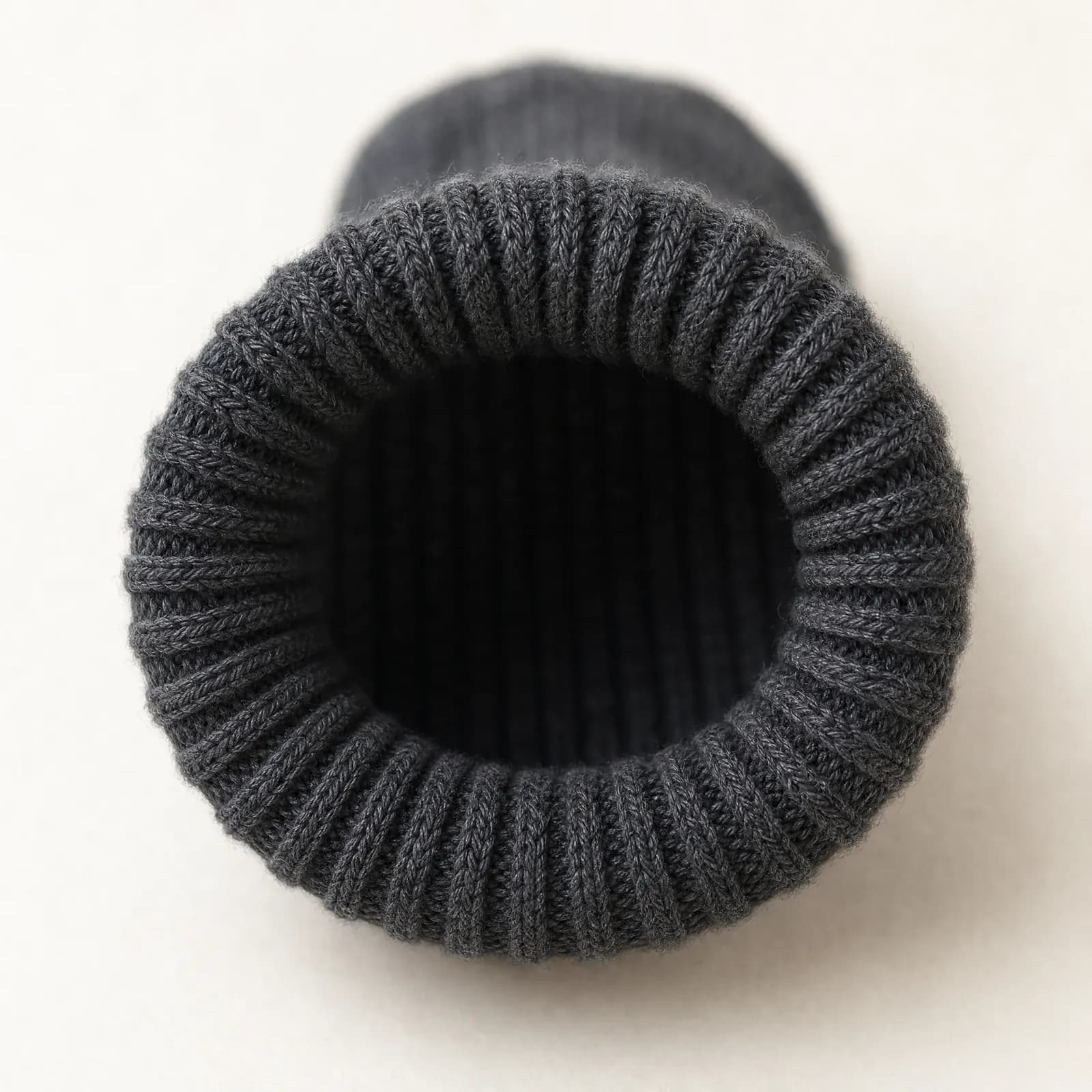
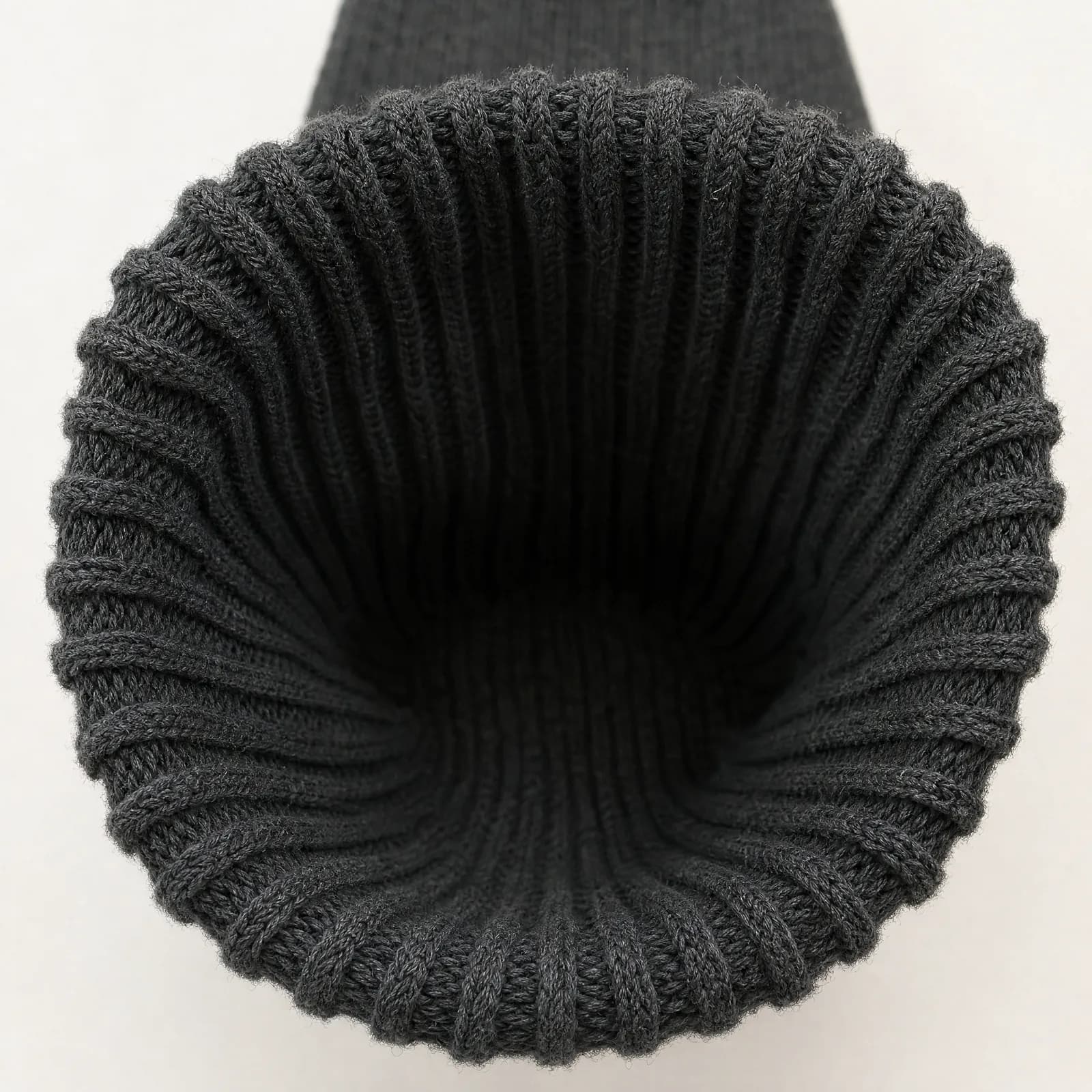
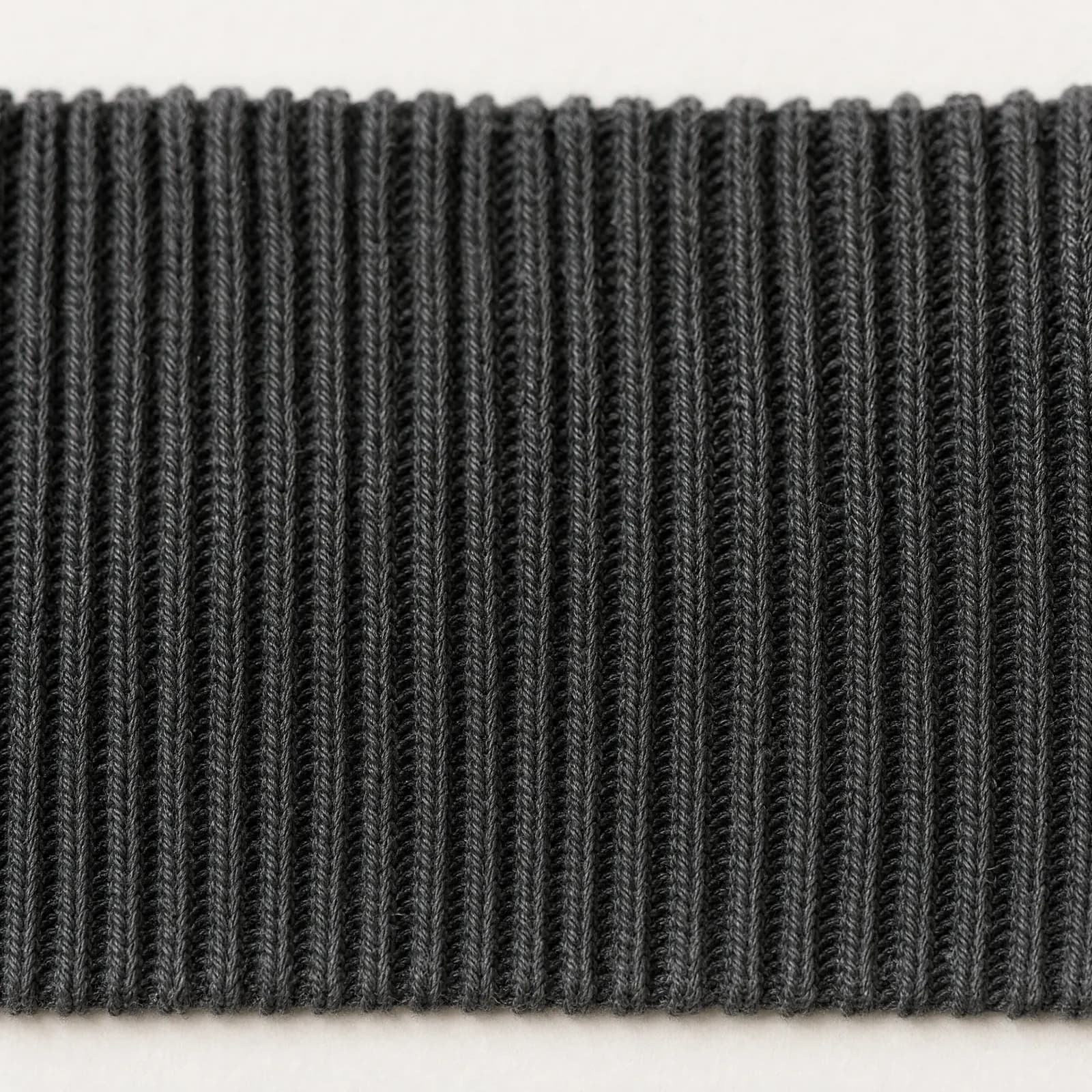
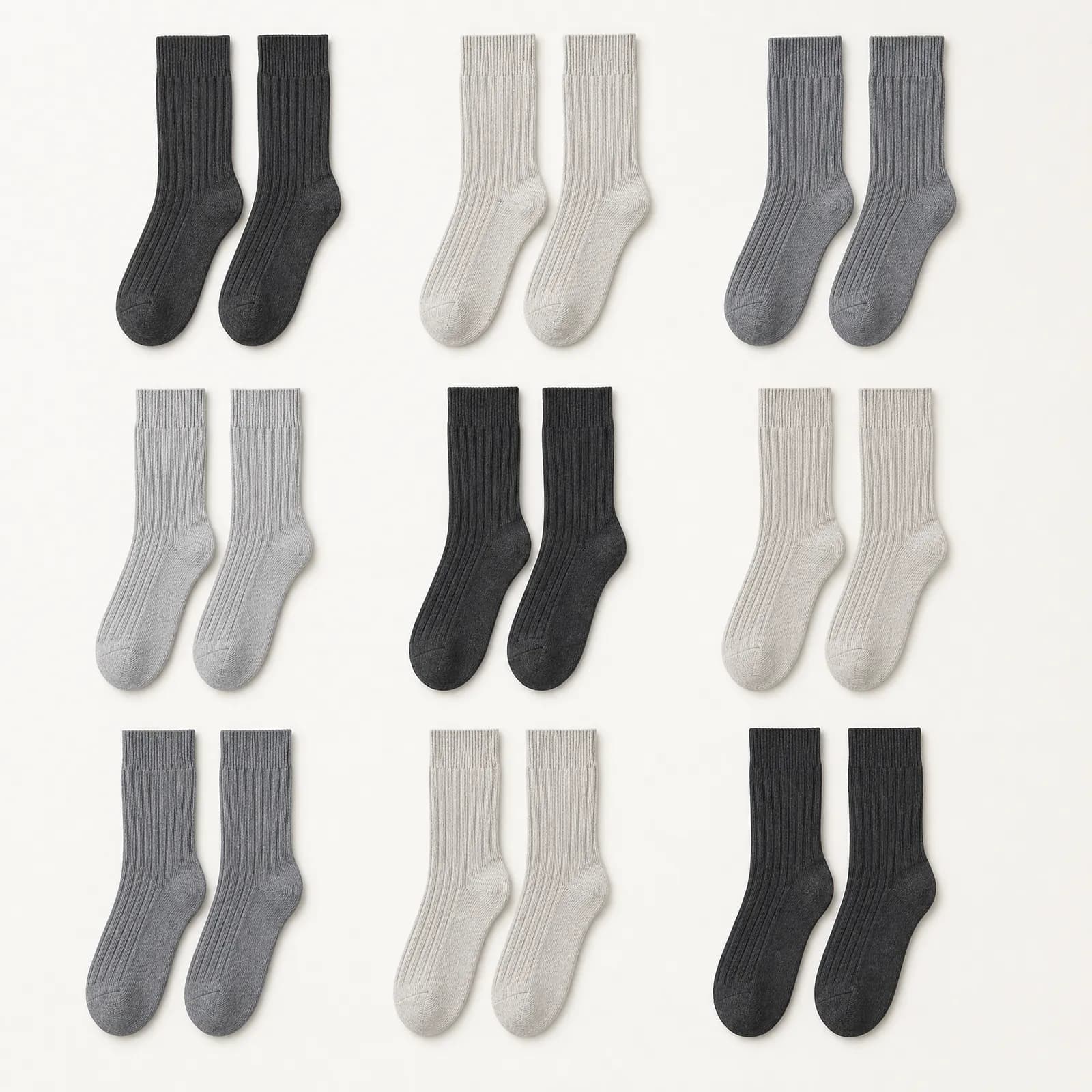
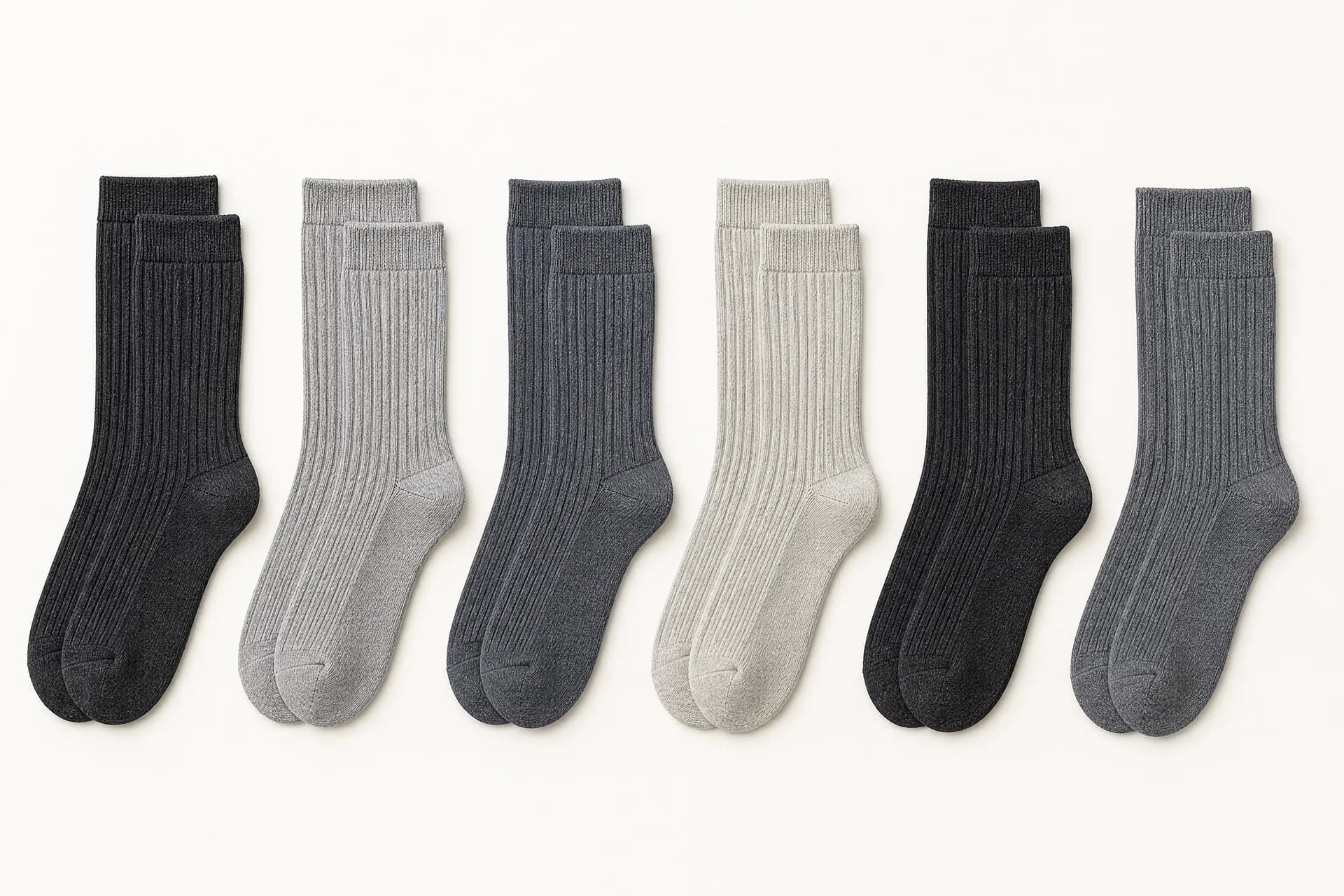
The version that costs the band the least is also the shortest. Four positions, no special equipment, and nothing to keep to hand. Diagrams only — there is never a person or a pair of hands in anything this tool produces.
Printable on one sheet, in black and white, with the diagrams still legible. The print stylesheet drops everything else on the page.
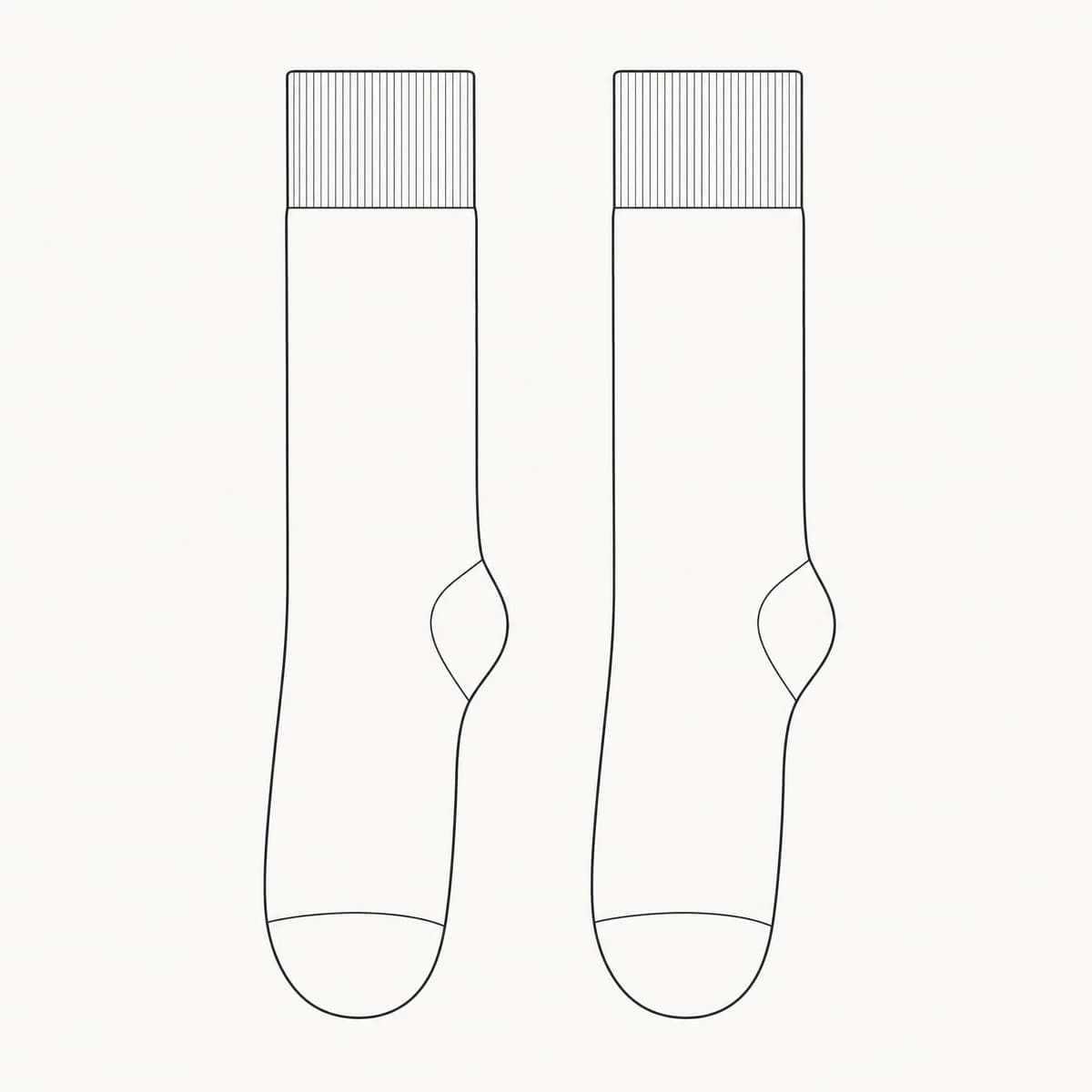
Both socks fully extended, side by side, cuffs at the same end. Nothing is being held open yet.
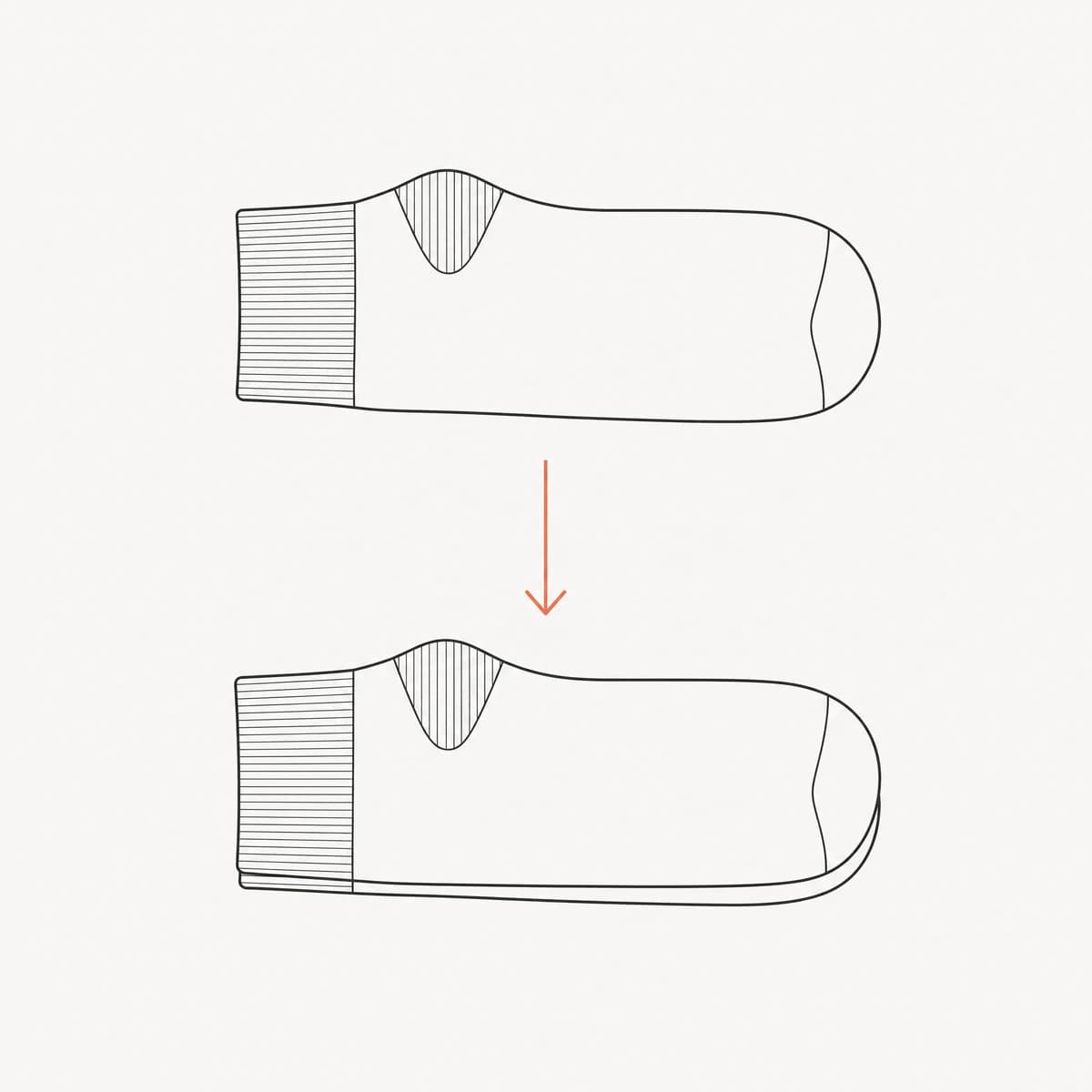
One directly on top of the other. This is the movement the classic method replaces with a roll, and it is the one that costs the band nothing.
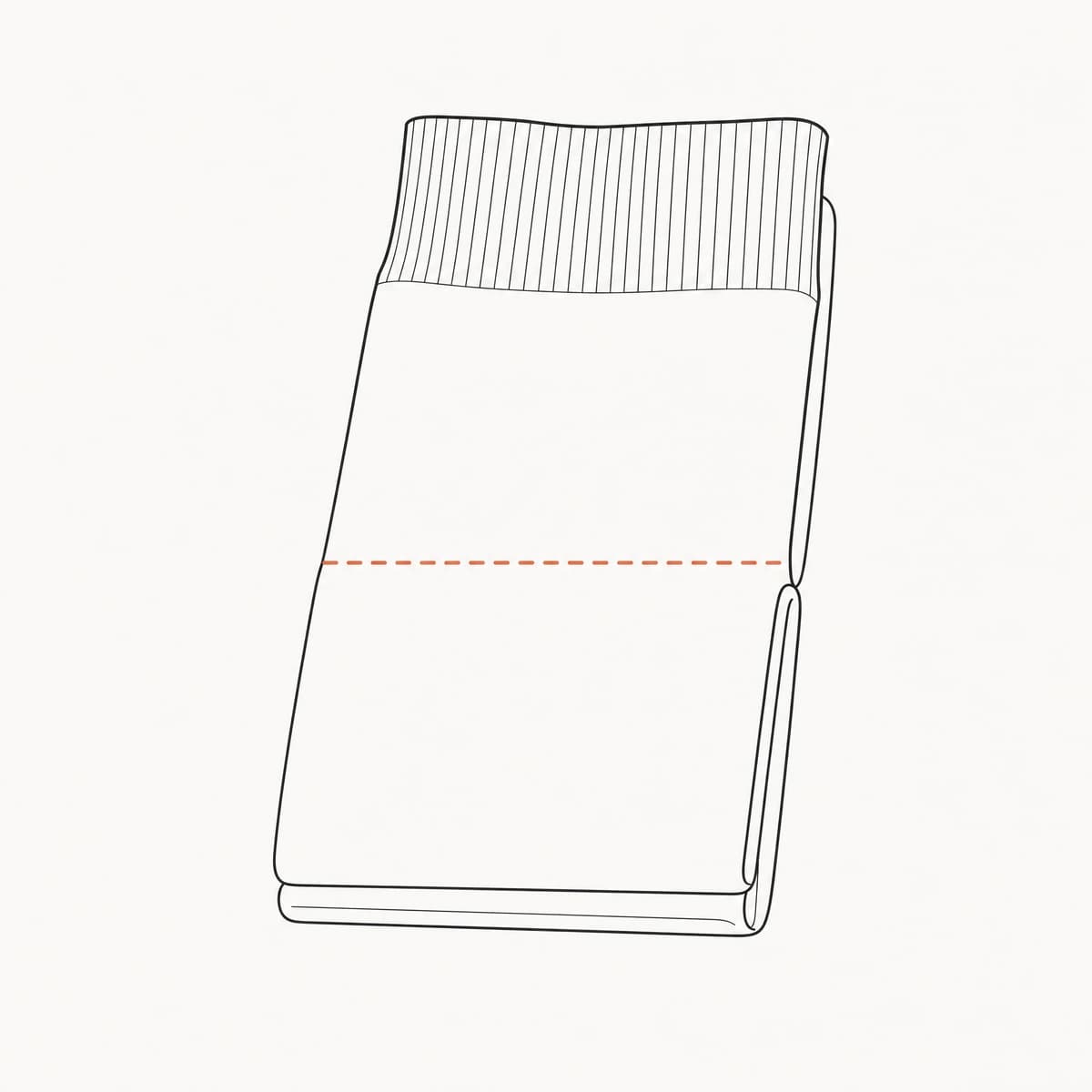
A single fold, at the middle, away from the band. The cuff end stays open and unfolded.
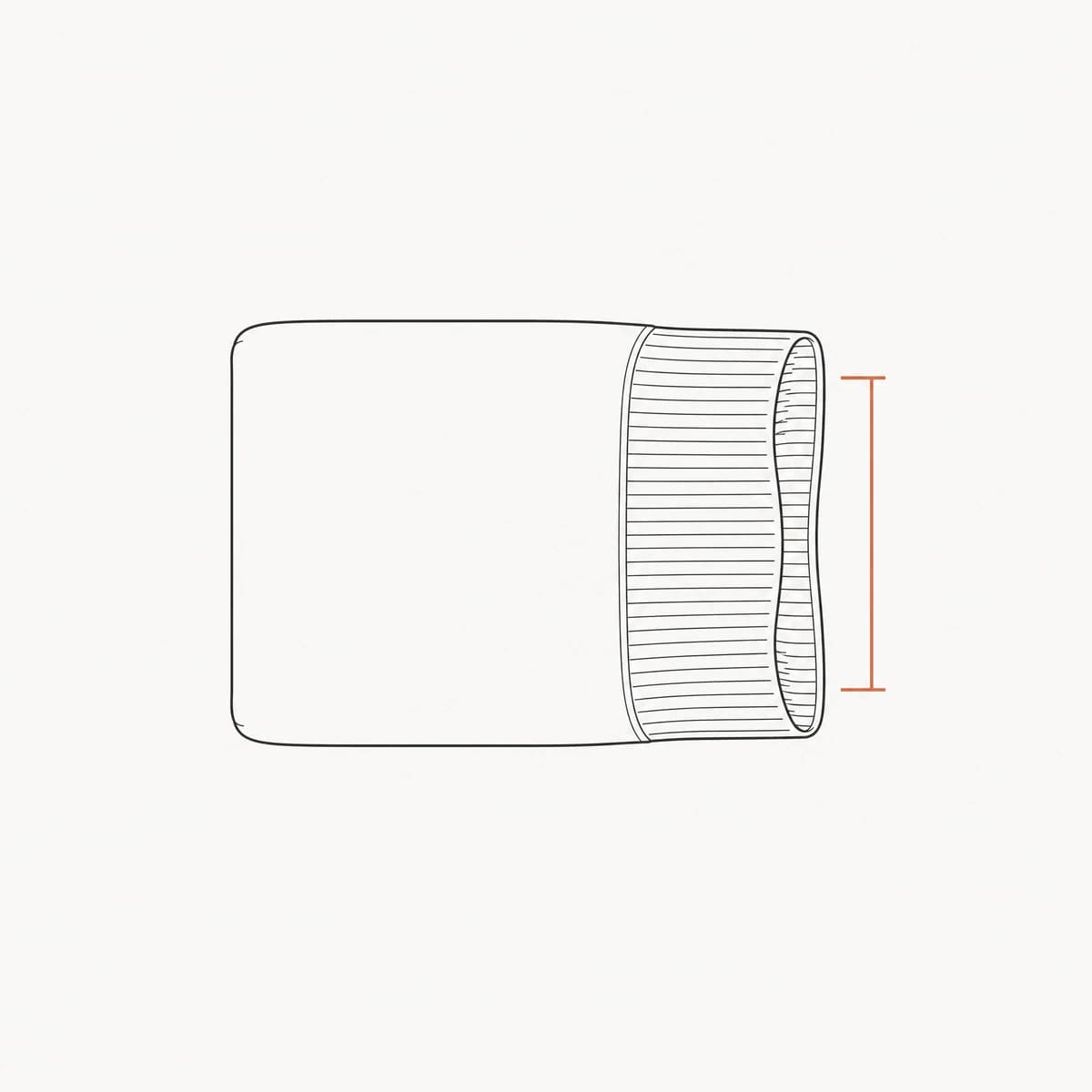
The finished shape holds together on its own. The rib sits at its resting width for the entire time it waits.
This is not a tool for telling you that you have been doing it wrong. For a great many pairs the honest answer is that storage is not what will finish them — wearing and washing is the larger account, and storage is the small one running alongside it.
Every reading returns a list of the pairs that need no attention at all, and that list is shown at the same size and in the same place as everything else. It is never dimmed, never folded away and never behind the paywall — a tool whose every answer is a reprimand is just a way of manufacturing worry.
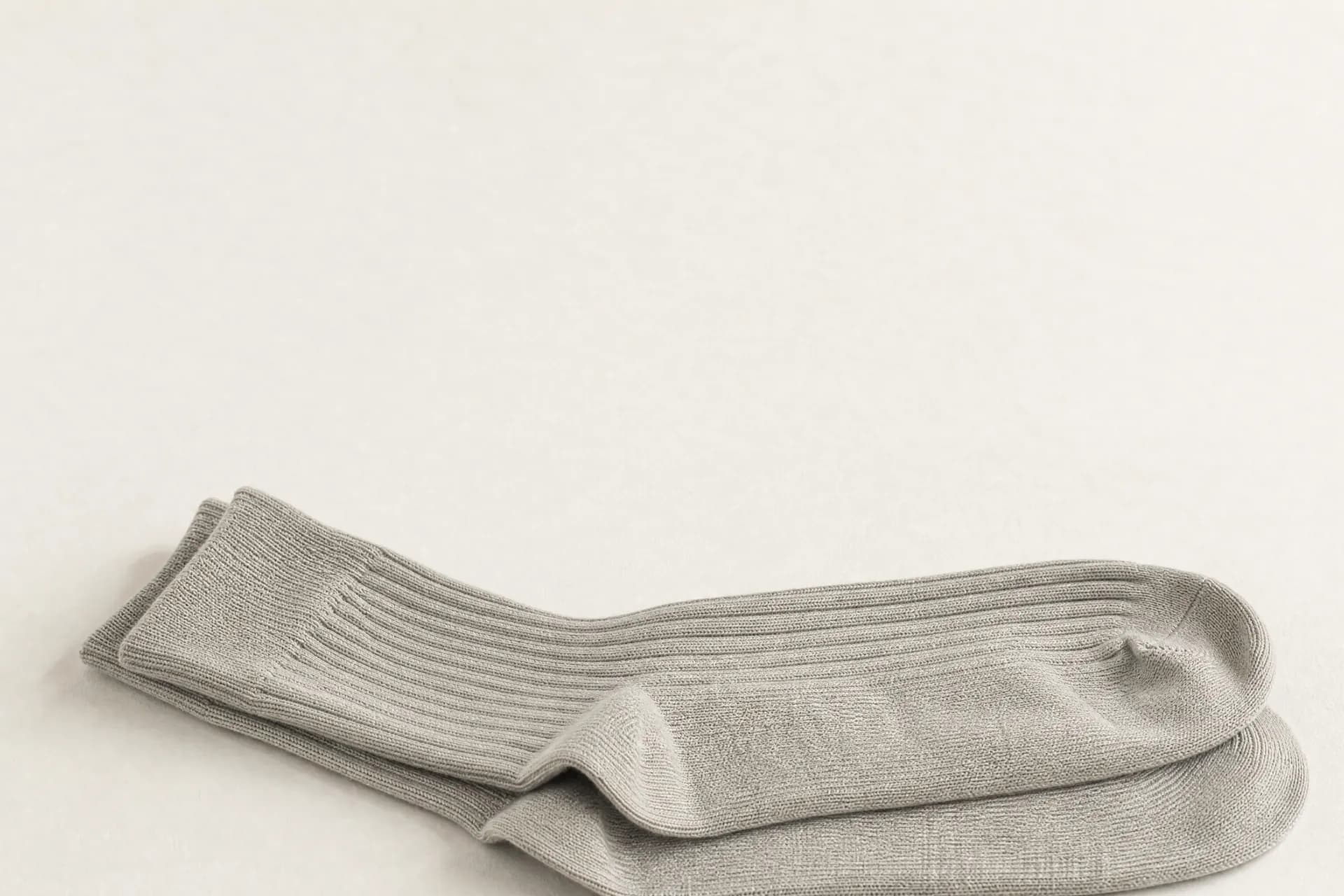
The free plan tells you what the way you already store them is costing that pair, and it tells you in full which pairs need no attention and what the reading could not know. Those two never sit behind a paywall and are never obscured by a watermark, because hiding them would send you off to fix something that did not need fixing.
What you pay for is the comparison: four methods side by side, the step diagram for the easier one, and the print sheet. Knowing that something is slightly bad is worth very little on its own — what changes your behaviour is knowing what to do instead and that it takes no more doing than what you do now. Putting a drawer away for a season is where that pays for itself.
No card, no renewal
Enough to settle the question for the pairs you are unsure about.
50 units of use per month
or $58 per year, incl. VAT
The comparison card, which is the part that changes what you do.
360 units of use per month
or $173 per year, incl. VAT
For the changeover, when a whole drawer goes away at once.
1250 units of use per month
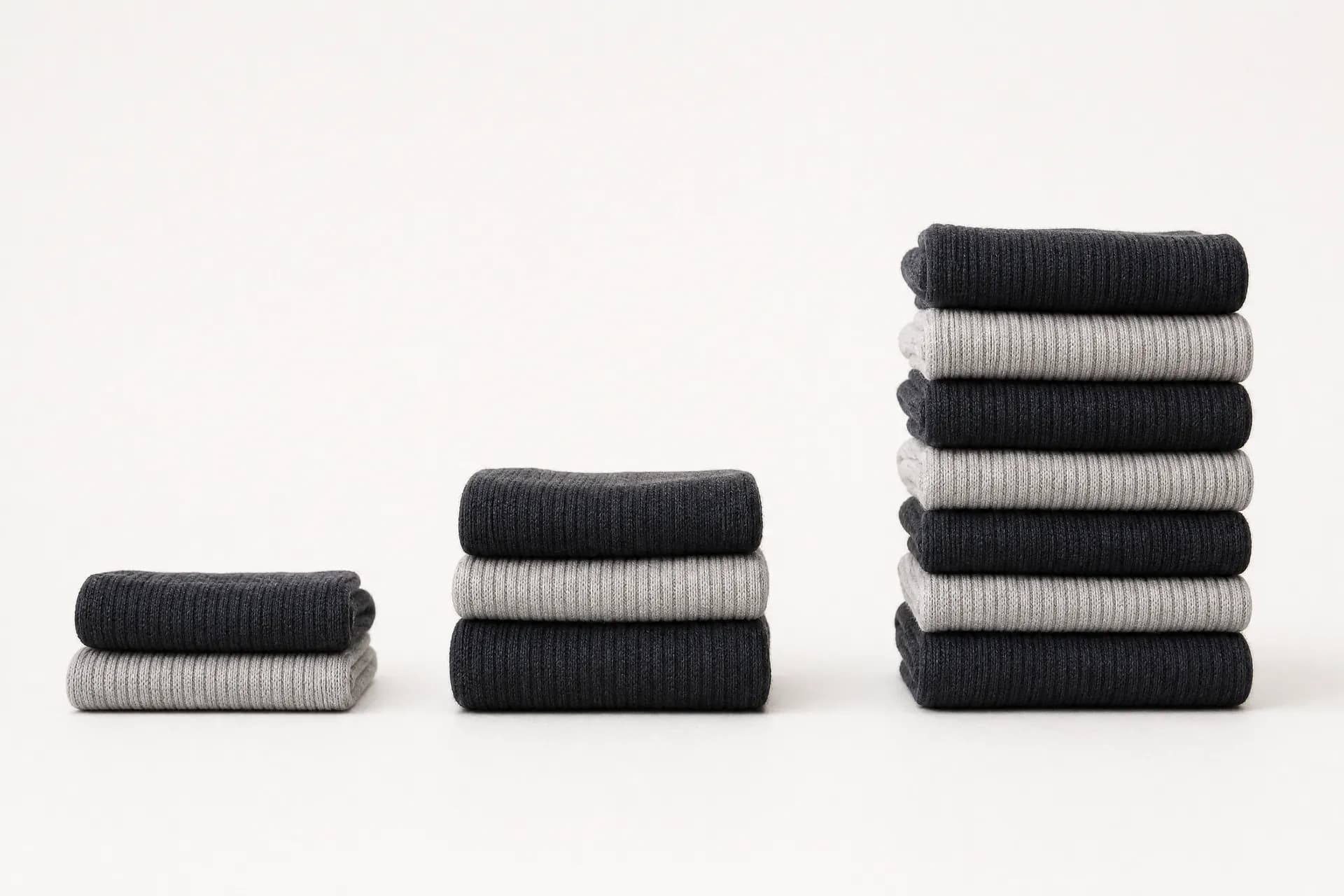
One pair, a week's worth, a season's worth. The plans are sized the same way.
Anything not covered here goes to support@ismallk.com, or see Support.
Almost certainly not, and this is the question worth answering plainly. In most cases the effect is small. For socks with a higher elastic content, a wider rib and frequent use, storage matters far less than wearing and washing, and those three things describe a large share of everything in an ordinary drawer.
Where it does add up is the narrow case: a band with little or no elastic fibre, a narrow rib, and months of sitting rolled — the pairs that go away at the end of a season and come back at the start of the next one. That is the case this tool is for. The reading will say plainly which of your pairs are in it and which are not.
None. This service recommends no storage product, no sock brand and no merchandise of any kind, and it provides no purchasing route. There is nothing to buy here and nothing being sold on anyone else's behalf.
Where a method is described, it is described generically — laying a pair flat, folding once, leaving the band alone — and it does not point at any product. The whole finding of the tool is that the method that costs the elastic least also costs you the least, and needs nothing you do not already have.
Photographs of composition labels and cuffs are used to produce your reading and nothing else. They are not used to train models — not ours and not anyone else's — and they are not sold, shared or licensed.
Uploads are retained for 30 days so that you can come back to a reading, and are then deleted automatically. You can delete any upload, any reading and your whole account at any time from your account page, and deletion removes the underlying files rather than only hiding them. Full detail is in the Privacy Policy.
The tool declines photographs of socks being worn. It only accepts a composition label and a cuff, and nothing it produces contains a person, a body part or a pair of hands.
It estimates how sustained stretching during storage affects the elasticity of a cuff, from the elastic percentage on the label, the rib structure visible in the photograph and the storage duration you enter. It is not a test of your specific pair, and no physical measurement is taken.
A composition label gives only the percentage of elastic fibre and never its type or its recovery grade, and different elastic fibres differ considerably in how they resist being held at a fixed extension. Drawer temperature and humidity are unknown, and so is how long the pair has already been in service.
For those reasons every estimate is given as a range, and no assurance is given that any storage method prevents slackening. Each reading lists what it could not know alongside what it found.
You can cancel at any time from your billing page, in one step. Cancelling takes no more effort than subscribing did, and it does not require you to contact us first.
You also have a statutory right to cancel a subscription within 14 days of starting it under the Consumer Contracts (Information, Cancellation and Additional Charges) Regulations 2013. Because this is digital content and a digital service supplied immediately, that right ends early only if you have expressly asked for immediate supply and have acknowledged that you will lose the right to cancel — which is why the checkout asks you to tick those two things separately and never ticks them for you.
If you did not ask for immediate supply, the 14 days run in full and you get a refund of what you paid. Cancellation and Refunds sets out the process, and there is a statutory cancellation form there you may use.
No, and no. An allowance is a measure of how much of the service you may use in a period. It is not money, it is not stored value, it is not redeemable for cash and it is not transferable.
Unused allowance does not carry over into the following period. There are no credit packs, no top-ups and no balances to hold — if you need more in a given month, the only options are a larger plan or waiting for the period to roll over.
Yes. Before you subscribe you are shown a summary screen with the amount, the currency, the billing period and the exact date of the first renewal. Before each renewal you are sent a separate reminder email that contains nothing but that reminder — it is never mixed into a marketing message.
These reminders, the 14-day cancellation window at the start, a further 14-day window after each renewal and a one-step exit are all implemented voluntarily, ahead of the subscription provisions of the Digital Markets, Competition and Consumers Act 2024 coming into force. We have chosen to run them now rather than wait.
This service is for people aged 18 or over. Accounts are not knowingly created for anyone under 18, and if we learn that an account belongs to someone under 18 we close it and delete the data associated with it.
It is also not for high-risk use. Readings must not be relied on for medical, legal, financial, safety, employment, credit, housing or judicial decisions.
Read one pair without paying anything. If it comes back saying the way you already store them is fine, that is a real answer and it is the one you will get most of the time.